





In June 2025, Humind was named winner of the Petit Poucet competition in the ConsumerTech category, out of 386 applications. One year later, back in the room for the 2026 awards ceremony, here is what a jury saw in an AI sales assistant for e-commerce, and what that recognition actually changed.
A student competition gone 100% tech
The Petit Poucet competition was created in 2002 by Mathias Monribot and has supported more than 200 projects since. It is open to students and to founders who graduated less than two years ago. The window is narrow, and it is a real filter: you are judged at the precise moment when you have almost nothing to show, apart from the idea, the first lines of product and the first clients who said yes.
In 2025, the competition was taken over by Benoît Charles-Lavauzelle and Fabrice Bernhard, co-founders of Groupe Theodo and former winners themselves. They turned it into an edition entirely dedicated to tech, organized around five categories: IndusTech, ConsumerTech, ServiceTech, HealthTech and Tech for Tech, with a single winner per category.
This first tech edition received 386 applications. Thirty finalists pitched in Paris in May 2025, and five names came out of it. Ours was one of them, in ConsumerTech, alongside SpaceLocker (IndusTech), Leia (ServiceTech), Pictaderm (HealthTech) and SkAI Tech (Tech for Tech). The results were announced publicly in May 2025, and the prizes were handed out at the Petit Poucet Party in Paris on June 14, 2025.
What a jury saw in an AI sales assistant for e-commerce
The sentence printed next to our name in the announcement spoke neither of models, nor vector databases, nor latency. It spoke of customer experience: "the perfect customer experience with the first AI sales assistant for e-commerce". That is the competition's wording, and it explains our place in the ConsumerTech category.
The problem we work on is not technical. In a store, someone welcomes you, asks two questions, notices you are hesitating between two products and suggests a third one you had not seen. Online, that person has been replaced by a column of filters and a search bar. Every merchant we meet describes the same symptom: traffic arrives, browses and leaves without ever asking the question that would have unlocked the purchase.
Judged on the shopper, not on the stack
The final pitch took place in front of a panel of investors and entrepreneurs, including Vincent Torres, an alumnus of the competition and founder of Revers.io, who then presented our prize on stage at the Petit Poucet Party, with a speech we still remember. Nobody on that jury asked which model we were running. They asked whether a shopper ends the conversation knowing what to buy, whether a merchant learns something they did not already know, and what happens when the agent does not have the answer. A year later, those three questions are still the ones we use internally to arbitrate the roadmap. You can see where they led us on the agentic commerce page and in the use cases deployed with merchants today.
What a prize really changes at this stage
Four things, concretely.
The first is validation from the outside. A jury of entrepreneurs pulling your file out of 386 applications, owing you nothing, is the first signal that comes neither from your friends and family nor from your school. At this stage of a company, one line of recognition does the work that client names and numbers will do later.
"The prize came at the precise moment when outside validation changes everything. It gave the solution credibility with merchants who did not know us yet, well before the numbers could do it."
Alexis Hespelle
Co-founder, Humind
The second is a sentence. "Petit Poucet ConsumerTech 2025 winner" fits in an email signature and in an outreach subject line, and that sentence opened doors an email alone did not open.
The third is the most concrete: a 10,000 euro grant. It funded our participation in One to One Retail E-Commerce Monaco in March 2026, our first trade show, and we wrote about what it brought us: more than ninety demos and around thirty clients signed. Few grants can claim a better return.
The fourth, and the most lasting, is the network. The prize opens access to a community of more than 200 alumni entrepreneurs who went through the same stage. That is where we met, among others, Benjamin Hakoun, co-founder of Fittingbox, Jérôme Varnier, co-founder of Innovorder, and Aurélien Tourret, co-founder of Caneva, and the list cannot be exhaustive. Founders who started the way we are starting, and who went through what we are going through: their feedback is worth months of trial and error, and several of the conversations that mattered most to us this year began in that room.
"What the prize really brought us does not show on a slide: entrepreneurs who went through exactly what we were going through, and who pick up the phone. A year later, those are still the conversations that count."
Dan Castiel
Co-founder, Humind
One year later, back in the room on the alumni side

On June 30, 2026, we went back to the Petit Poucet awards ceremony in Paris, this time on the other side of the room. The 2026 edition received noticeably more applications than the previous one, and we had relayed the call for applications to our own communities earlier in the year.
Watching five teams receive the news we had received twelve months earlier puts a year in perspective: almost nothing of what happens between two ceremonies is visible from the outside on the night you win.
Where the AI sales assistant stands today
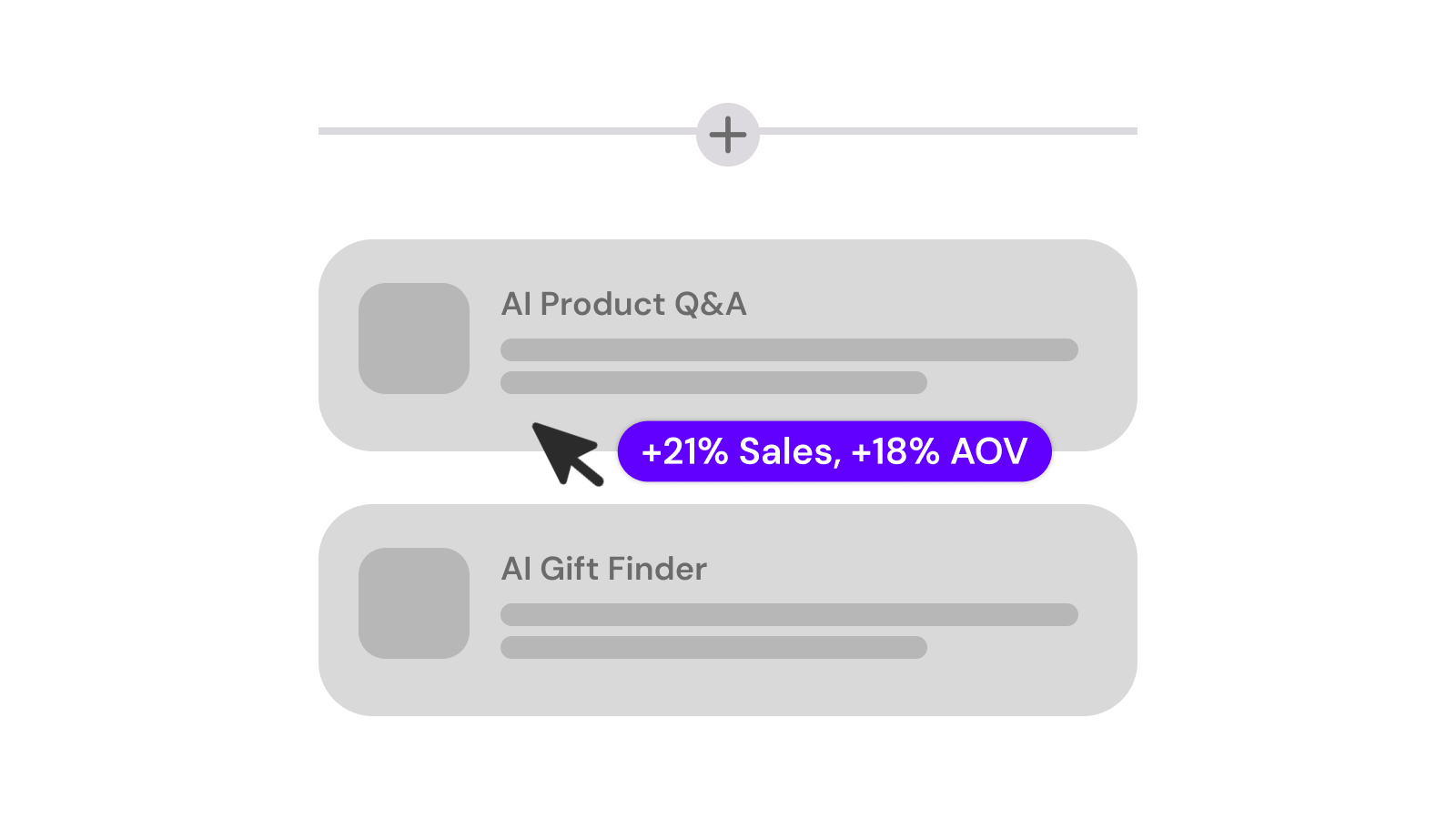
Between the two ceremonies, the product changed scale. In January 2026, SKEMA Business School reported that Humind was working with around a hundred merchants, including Puressentiel, Izipizi, La Chaise Longue and Supersmart, and that we had been selected for the third cohort of the Microsoft GenAI Studio. In May 2026, Microsoft published figures from that program: visitors who talk with the agent convert up to 21% more than others, and the average size of our new clients tripled in four months. In 2025, the jury had backed an argument about what online shopping lacks; the numbers have confirmed it since.
The team, meanwhile, is still two people, and we are hiring. In the meantime, we have surrounded ourselves differently: around sixty AI agents assist us daily across all our tasks, from development to support. It is consistent with what we sell, and it is probably the most honest preview of what a company founded in 2026 will look like.
If you run an online store and want to see what an AI sales assistant does with your catalog, request a demo and we will show you.